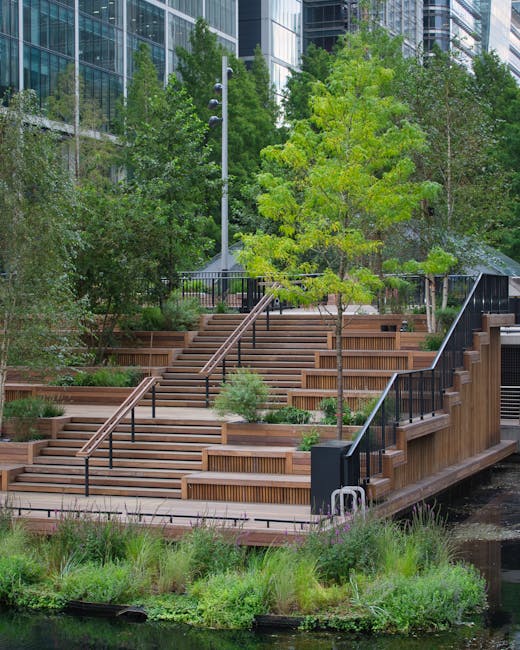
Surrey Quays gardening tips for riverside terraces
Riverside terraces in Surrey Quays can be brilliant. You get light, views, and that calm water-side feel that makes even a small outdoor space seem bigger than it is. But let's be honest: terrace gardening near the river is not the same as gardening in a sheltered suburban back garden. Wind can be sharper, containers dry out faster, and salt-laced air, shade from neighbouring buildings, and awkward balcony edges all ask for a different approach.
If you are looking for Surrey Quays gardening tips for riverside terraces, this guide walks through the practical stuff that actually matters. We will cover planting choices, wind and drainage, layout ideas, maintenance habits, and the small decisions that stop a terrace from looking tired by mid-summer. You will also find a simple checklist, a comparison table, and a realistic example of how to make a compact riverside space feel easy to live with, not high-maintenance. Because nobody wants a lovely terrace that turns into a weekly headache.
For readers who want help beyond the basics, it can also make sense to look at regular garden maintenance or the broader services overview to see what support suits a terrace setting. And if your planting plan is being held back by poor structure, hard surfaces, or a layout that never quite works, landscape gardening is often the step that changes everything.
Table of Contents
- Why Surrey Quays gardening tips for riverside terraces Matters
- How Surrey Quays gardening tips for riverside terraces Works
- Key Benefits and Practical Advantages
- Who This Is For and When It Makes Sense
- Step-by-Step Guidance
- Expert Tips for Better Results
- Common Mistakes to Avoid
- Tools, Resources and Recommendations
- Law, Compliance, Standards, or Best Practice
- Options, Methods, or Comparison Table
- Case Study or Real-World Example
- Practical Checklist
- Conclusion
- Frequently Asked Questions
Why Surrey Quays gardening tips for riverside terraces Matters
Terrace gardening by the river is a different game. Surrey Quays has a mix of modern apartments, waterside developments, and exposed outdoor spaces that often look generous on paper but behave quite differently in real life. A terrace can feel breezy in spring, hot in a summer afternoon, and suddenly chilly once the sun drops behind a building. Those swings affect plant choice, watering, and even where furniture should sit.
Why does that matter? Because many terrace gardens fail for ordinary reasons that are easy to fix early. Plants are chosen for looks rather than resilience. Pots are too light and tip in the wind. Water escapes too quickly. Or the whole space gets packed with containers until there is nowhere to move. Truth be told, a small riverside terrace often needs more editing than adding.
Another reason this topic matters is that terrace gardening can be incredibly rewarding when it is done properly. You can create a calm outdoor room, soften hard edges, attract birds and pollinators, and make a compact space feel private. Even a few well-chosen plants can shift the mood of a flat. That is especially useful in a riverside setting, where hard paving and glass fronts can otherwise make everything feel a bit clinical.
There is also a practical side. A well-planned terrace is easier to maintain, safer to move around, and less likely to suffer from waterlogging, messy leaf drop, or wind damage. In our experience, the best terrace gardens are not the fanciest ones. They are the ones that are quietly well thought through.
How Surrey Quays gardening tips for riverside terraces Works
The basic idea is simple: match your planting and layout to the realities of a riverside terrace rather than fighting them. If a space is exposed, use heavier containers and wind-tolerant plants. If it gets only partial sun because the building opposite blocks light, choose shade-tolerant species and avoid over-packing with sun-lovers that will sulk by June. If rain tends to pool on the surface, improve drainage before adding anything expensive.
It helps to think in layers. First comes the structure: flooring, edging, screening, storage, and the routes you need to walk through the space without side-stepping a pot every two seconds. Then comes planting: evergreen backbones, seasonal colour, herbs, climbers, or small shrubs. Finally comes maintenance: watering, feeding, trimming, and keeping an eye on the bits that drift out of control. Gardening on a terrace is never just about plants. It is about the system around them.
That system can be quite forgiving if you build it sensibly. For example, a deep terracotta planter with crocosmia, ferns, or lavender will usually behave better than several tiny lightweight pots that dry out by lunch. A trellis with a climber can create privacy without blocking too much light. And a simple run of containers can be easier to maintain than a highly detailed planting scheme with dozens of little decisions. You do not need to make it complicated. In fact, the simpler the better, usually.
If the terrace needs hard landscaping to make that system work, it may be worth considering decking services or broader landscaping. A stable surface, proper drainage, and a sensible layout often do more for a terrace than another round of decorative pots ever will.
Key Benefits and Practical Advantages
Good terrace gardening in Surrey Quays gives you more than a pretty view. It solves everyday problems and makes the space usable for longer through the year.
- Better privacy: Screened planting and climbers can reduce that fishbowl feeling common in apartment developments.
- More usable space: A tidy layout makes even a narrow terrace feel intentional rather than cramped.
- Less maintenance stress: With the right plants and containers, you spend less time rescuing things from the weather.
- Improved drainage and cleanliness: Fewer waterlogged pots and less soil spill mean a cleaner terrace surface.
- Year-round interest: A mix of evergreen structure and seasonal planting keeps the space from looking bare in winter.
- Better value from the space: A well-designed terrace is used more often, which is the whole point really.
There is also the emotional benefit, which people often underestimate. A terrace can become the place where you drink tea before work, air washing on a summer evening, or sit for ten quiet minutes after a noisy day. That matters. It is not just outdoor decor. It changes how the home feels.
For some homes, the most useful improvement is not planting at all but clearing out what is already there and starting fresh. If that sounds familiar, garden clearance can be a sensible first step before rebuilding the space.
Who This Is For and When It Makes Sense
This guide is useful if you live in a Surrey Quays flat or townhouse with a terrace, balcony-style garden, roof terrace, or riverside patio. It is especially relevant if the space feels exposed, awkwardly shaped, or hard to keep looking good. You might already have a few pots and a chair or two, but the area still feels unfinished. Or maybe it looked wonderful in early spring and then, by August, everything went floppy, scorched, or windswept.
It also makes sense for landlords, property managers, and residents' associations who want outdoor areas to look cared for without creating a constant upkeep burden. Terrace gardens in shared developments need a balanced approach. Too little structure, and the space looks neglected. Too much planting, and you create maintenance headaches for everyone. Somewhere in the middle is usually the sweet spot.
If your main issue is ongoing care rather than a full redesign, regular garden maintenance can keep things on track. And if the terrace edges into larger communal or external areas, landscape gardening may be the right kind of support. Not every problem needs a full rebuild. Sometimes it just needs steady attention.
Step-by-Step Guidance
Here is a straightforward way to approach a riverside terrace without overthinking it.
- Assess the conditions. Watch the terrace at different times of day. Note where the wind hits, where water collects, and which corners get the best light.
- Decide what the space needs to do. Is it for dining, lounging, growing herbs, screening, or all of the above? A terrace that tries to do everything at once usually does nothing well.
- Choose a small number of strong features. Think one privacy screen, one seating area, a few large pots, and maybe a climber or two.
- Use containers with enough depth. Deep pots hold moisture more steadily and give roots room to settle. Tiny pots are fiddly and dry out quickly.
- Prioritise wind-resistant plants. On exposed terraces, go for species that can cope with movement, drying, and a bit of rough weather.
- Build in drainage. Make sure containers do not sit in trapped water. Raise pots slightly if needed so the bases can breathe.
- Group plants sensibly. Put thirsty plants together and drought-tolerant ones together. It makes watering much simpler.
- Finish with maintenance habits. Check moisture, remove dead growth, and rotate pots where needed so all sides get light.
A useful rule of thumb: if a decision makes weekly maintenance harder, rethink it. A terrace should suit your life, not become a hobby you secretly resent by Thursday.
People often ask whether they should start with plants or hard surfaces. On a riverside terrace, the better answer is usually the surface first. Once the floor feels stable and the layout makes sense, planting falls into place far more easily.
Expert Tips for Better Results
These are the small things that make a big difference on exposed urban terraces.
1. Use weight strategically
Light pots look tidy, but they can become annoying in windy conditions. Mix in heavier planters or add weight at the base where safe and appropriate. The goal is stability without making the terrace impossible to move around.
2. Create a wind buffer
Instead of trying to block every gust, soften it. A staggered planting screen, a trellis with climbers, or a taller planter placed in the right spot can break the wind and make the area feel calmer. That is often more effective than a big solid barrier that turns into a sail.
3. Keep the colour palette restrained
A riverside terrace can look cluttered fast. Stick to a limited palette of foliage colours, pot finishes, and a few flowering tones. Greens, silvers, whites, and soft blues tend to work well in bright waterside light. Simple looks more expensive, oddly enough.
4. Think in all seasons
Do not rely on one burst of summer interest. Combine evergreen structure, winter texture, and spring or autumn highlights. That way, the terrace still feels alive in January when many seasonal planting schemes are doing absolutely nothing.
5. Leave room to move
You should be able to carry a watering can, open the door fully, and step outside without a clumsy shuffle. If you are constantly edge-walking around containers, the layout is wrong.
For terraces that need more definition, a simple timber edge, screen, or platform can help. Decking services are especially helpful where the existing surface is uneven, tired, or just not lending the space any structure.
Common Mistakes to Avoid
Most terrace problems are predictable. That is the good news. The bad news is that people repeat them all the time.
- Choosing plants for looks only. A beautiful plant that hates wind or dries out in half a day will become a disappointment very quickly.
- Using too many small pots. They look neat for about a week, then become constant maintenance.
- Forgetting drainage holes. Yes, really. It sounds obvious, but trapped water is one of the most common reasons containers fail.
- Blocking access. A terrace should not feel like a maze of fragile stems and half-empty planters.
- Ignoring the view from inside. You will see the terrace from your living room or kitchen much more often than from the door itself.
- Overfeeding or overwatering. In sheltered conditions, this can make plants soft and weak. On terraces, it often just creates mess.
- Using cheap, unstable planters. They may look fine at first, then blow over, crack, or stain the surface.
A lot of these mistakes come from rushing. You buy what looks nice on a sunny Saturday, then spend the next month wondering why it all feels off. Been there. A little planning saves a lot of awkwardness later.
Tools, Resources and Recommendations
You do not need a shed full of equipment to manage a terrace properly. A few sensible tools go a long way.
- Watering can or hose access plan: Keep watering practical. If carrying water is a pain, the terrace will suffer.
- Long-spouted can: Useful for reaching into deep planters without drenching everything else.
- Secateurs: Handy for tidy pruning and deadheading, especially with climbers and shrubs.
- Moisture check: Your finger works fine, to be fair. Push a little into the compost before watering again.
- Stable plant supports: Canes, discreet ties, or supports help in breezy spots.
- Quality compost and top dressing: Better compost tends to hold moisture and nutrients more reliably.
- Heavy-duty trays or raised feet: These can help with drainage and reduce staining on paved surfaces.
If you are starting from scratch, it can be worth seeking help with layout as well as planting. Some terraces are fine with a few adjustments; others need a more considered rebuild. Landscaping and landscape gardening can be the difference between a space that merely has plants and one that actually works.
And if your terrace has become a collection point for broken pots, old compost bags, and the odd bit of mystery debris, garden clearance is often the cleanest way to reset it. Sometimes you need a proper blank slate. No drama, just reality.
Law, Compliance, Standards, or Best Practice
For most residential terraces, the main concerns are practical rather than heavily regulated, but best practice still matters. In shared buildings or managed developments, it is sensible to check lease terms, building rules, and any estate guidance before making significant changes such as fixed screens, heavier structures, drilling, or major planting containers. If a terrace is part of a communal system, what looks like a simple upgrade can affect drainage, access, or appearance rules.
Safety is another quiet but important issue. Heavy pots, watering practices, and decked surfaces all need sensible handling. Wet paving can become slippery. Poorly secured screens can move in strong gusts. Overloaded planters can stress surfaces or make access awkward. Common sense goes a long way here, but it should be deliberate common sense.
Where work involves tools, raised elements, or structural changes, good practice is to use insured and experienced help. It is also wise to ask how waste is handled, whether materials are recycled where appropriate, and how disruption is minimised. If you are comparing options, pages like insurance and safety, recycling and sustainability, and payment and security help build trust around the practical side of a project.
For a broader view of company processes and service expectations, about us and terms and conditions are also worth reading. The best terrace results usually come from work that is both attractive and properly managed. Boring? Maybe. Necessary? Absolutely.
Options, Methods, or Comparison Table
If you are deciding how to approach a riverside terrace, it helps to compare the main methods side by side. Not every space needs the same fix.
| Approach | Best for | Strengths | Trade-offs |
|---|---|---|---|
| Container planting only | Small terraces, renters, flexible layouts | Easy to change, low commitment, good for seasonal colour | Can dry out quickly and look cluttered if overdone |
| Planters + screening | Overlooked or windy terraces | Improves privacy and comfort, softens harsh edges | Needs careful placement and a bit more maintenance |
| Decking or improved hard surface | Uneven, tired, or awkward terraces | Creates structure and cleaner lines, easier to furnish | Higher upfront work and must be planned properly |
| Full landscape redesign | Spaces with poor flow or multiple problems | Best long-term results, tailored to how you live | More involved and usually needs professional input |
For many Surrey Quays homes, the sweet spot is a hybrid: a practical surface, a few well-chosen large planters, and one or two screening elements. That combination usually gives you the best balance of beauty, function, and manageable upkeep.
Case Study or Real-World Example
Here is a realistic example. A resident with a medium-sized riverside terrace wanted somewhere to sit after work, plus a bit of privacy from neighbouring flats. The space was attractive but a bit exposed, with three small pots, one tired chair, and a surface that always seemed to collect windblown debris. Nothing terrible, just underused.
The first step was clearing out the clutter and resetting the terrace. After that, the layout was simplified: one seating zone close to the door, two larger planters placed to soften the wind, and a climber trained up a simple support to add height without swallowing light. The plant selection leaned toward hardy foliage, a few herbs, and seasonal colour in smaller doses rather than everywhere at once.
The result was not dramatic in a flashy way. It was better than that. The terrace became easier to water, easier to tidy, and actually pleasant to use. By late afternoon, the planting made the space feel calmer, and in the evening there was just enough screening to relax without feeling boxed in. A small thing, maybe. But those small things are the whole point.
That kind of change often starts with the ground rules. If you need help getting from "messy but promising" to "actually functional", a combination of garden maintenance and the right planting plan is usually a very sensible starting point.
Practical Checklist
Use this before you buy anything new or rearrange the terrace.
- Check where the strongest wind hits the terrace.
- Note the sun pattern across morning, afternoon, and evening.
- Look for drainage problems after rain.
- Decide the main purpose of the space.
- Keep enough room for safe movement and door access.
- Choose a few larger, stable containers instead of many tiny ones.
- Select plants that suit the actual conditions, not just the photo.
- Mix evergreen structure with seasonal interest.
- Use supports or screening where privacy is needed.
- Plan a simple watering and pruning routine you can keep up with.
- Remove tired, broken, or unnecessary items before adding new ones.
- Check any building or lease rules before making fixed changes.
Expert summary: the best riverside terrace gardens in Surrey Quays are usually the least complicated ones. They rely on the right structure, the right plants, and a layout that respects wind, water, and everyday use. If those three things are right, the rest becomes much easier.
Get a free quote today and see how much you can save.
Conclusion
Surrey Quays gardening tips for riverside terraces come down to one practical idea: work with the space you have, not the one you wish you had. Riverside terraces are exposed, elegant, and often a little demanding. But with the right planting, sensible container choices, and a layout that feels calm rather than crowded, they can be some of the most rewarding outdoor spaces in London.
Start small if you need to. Fix the structure first. Choose resilient plants. Leave breathing room. Then build up from there. You do not need a grand transformation overnight. Honestly, the best terraces often come together in stages, with a few thoughtful decisions made at the right time.
If you are ready to improve your terrace, it helps to speak with a team that understands both planting and practical outdoor design. For many properties, that means looking at maintenance, landscaping, and long-term care together rather than as separate jobs. Slow, sensible, well-finished work tends to age beautifully. And in a riverside setting, that really counts.
There is something quietly satisfying about stepping outside on a breezy evening and seeing a terrace that just works. Not perfect. Just right for the place, and right for you.
Frequently Asked Questions
What are the best plants for riverside terraces in Surrey Quays?
Choose plants that handle wind, changing light, and quicker drying in containers. Hardy evergreens, ornamental grasses, lavender, ivy, ferns, and many compact shrubs can work well depending on sun exposure. The real key is matching the plant to the conditions rather than buying what looks best in the nursery.
How do I stop terrace pots blowing over?
Use heavier planters, wider bases, and strategic placement near walls or screened areas where possible. Grouping pots can also help them stabilise one another. Avoid tiny lightweight containers if the terrace is particularly exposed; they are often more trouble than they are worth.
Do riverside terraces need special watering?
Yes, they often dry out faster than sheltered gardens because of wind and sun reflecting off surrounding surfaces. Check moisture regularly, especially in warm or breezy weather. Deep containers and mulch can help reduce how quickly compost dries out.
How can I make a small Surrey Quays terrace feel bigger?
Keep the layout simple, use a limited colour palette, and avoid overcrowding with too many pots or pieces of furniture. Vertical elements like climbers or slim screening can create height without eating into floor space. Visual clutter is usually the real problem, not the size itself.
Is decking a good idea for riverside terraces?
It can be, especially where the surface is uneven, tired, or lacks structure. Decking can make the terrace feel more like an outdoor room and improve how furniture sits within the space. It needs to be planned carefully, though, particularly around drainage and any building rules.
What maintenance does a terrace garden need through the year?
Regular watering, deadheading, pruning, and checking for wind damage are the main tasks. In autumn, clear fallen leaves and check drainage. In winter, protect delicate plants and make sure pots are not sitting in water. A little routine care goes a long way.
Can I grow herbs on a riverside terrace?
Yes, and they can be a lovely addition. Herbs such as rosemary, thyme, sage, and mint often do well in containers, though they still need the right light and drainage. Mint in particular is best kept in its own pot unless you want it to take over. Which it probably will, given half a chance.
How do I choose between planting and landscaping first?
If the terrace has poor flow, uneven surfaces, or awkward access, fix the structure first. If the terrace already works well and just looks plain, planting may be enough. In many cases, a small amount of landscaping plus carefully chosen plants gives the best result.
Are terrace gardens suitable for renters?
Absolutely, as long as you keep the changes flexible and check any tenancy or building rules first. Container planting, movable screens, and portable furniture are all renter-friendly. Avoid fixed alterations unless you have the proper permission.
What are the most common terrace gardening mistakes?
The biggest mistakes are overcrowding, poor drainage, choosing the wrong plants, and ignoring wind exposure. A lot of people also forget to leave enough room for movement. A terrace that is hard to walk through quickly becomes irritating, even if the planting is nice.
How do I know when to bring in professional help?
If the terrace needs structural changes, drainage improvement, or a complete rethink, professional help usually saves time and prevents expensive mistakes. It is also useful if maintenance has become unmanageable. Sometimes the cleanest solution is to get the layout sorted properly and then enjoy it.
What is the best first step if my terrace looks tired and cluttered?
Start by clearing the space and removing anything broken, unused, or struggling badly. Once the terrace is reset, it is much easier to see what it actually needs. After that, you can decide whether the next step is maintenance, planting, or a fuller redesign.